BLOG# 18 The Boundary Fence!

The importance of healthy boundaries:

Personal healthy boundaries are an important way of being kind to ourselves.  Personal boundaries can be emotional, physical or spiritual. Metaphorically they are like a fence, in that they protect us from certain external things, as well as protect the things that are inside of us.  This is what personal boundaries are about, helping us to live a life that is healthy, positive, influenced by supportive forces, as well as living a life that is in sync with our personal values and beliefs.  Life experiences help us to develop our personal boundaries and determine what is important to us, what we expect of others and ourselves.  It is a two-way process.  Personal boundaries are an area I have often struggled with.  I think this is common amongst women because we are socially conditioned and programmed to please, accommodate and be liked. 

Circumstances where they are important:

There are many circumstances in which we must exercise our awareness and expectations of our personal boundaries.  You might have a natural tendency to say yes or agree to everything and want to please others, and find it difficult to say no or disagree.  Even if you feel you cannot do whatever you are being asked, or have an alternative belief or opinion.  Perhaps you are just too busy or it is not your responsibility, or what you are being asked to do makes you feel uncomfortable or even unsafe, or it is not aligned with your personal values or beliefs.  These are all times when we need to be assertive and exercise having firm boundaries with others, in order to be kind to ourselves.  Easier said than done you say! Even harder if someone is being demanding, controlling, criticizing, pushy, invasive, pleading or even smothering you with kindness! 

It gets easier with practice:

Ok, it isn’t always easy, but there are ways to be assertive which are empowering and practice does mean it gets easier.  It also gets easier as you start to be able to do the things you really want to do, and you stop doing the things you feel you have to or should do!  You will be happier and more authentic with others and in truth they would prefer that, than you signing up for a host of things you don’t want to do or agree with in the first place.  BINGO – everyone wins!

In order to maintain our self-esteem, there are often times when we must remind ourselves of our worth, who we are, what experiences we have overcome and the valuable contributions we make in places like our work, with family, friends and our community.  We have to shut out the negativity of others as well as say no at times. In my life I have sometimes come across people who seem to think it is a good idea to put others down, poke holes in their weaknesses or attack their vulnerability.   Instead of lifting these people up and supporting them, they grab these opportunities to somehow give themselves a power trip and ego boost.  Creating personal boundaries around these types of circumstances takes courage and practice, but is certainly worth doing. 

Some examples of healthy boundaries (liveboldandbloom.com):

  • Your Right to Privacy
  • The Ability to Change Your Mind
  • Your Right to Your Own Time
  • The Need to Handle Negative Energy.
  • The Freedom to Express Sexual Boundaries
  • The Freedom to Express Spiritual Boundaries
  • The Right to Remain True to Your Principles
  • The Ability to Communicate Physical Needs

Some situations and examples of enforcing our personal boundaries:

Example 1:

Scenario: You are being asked to do something that isn’t your responsibility.

Possible ways to reinforce your boundaries:

  • “Thanks for asking me about that, I’m busy with my areas of responsibility and I will leave that with you” or;
  •  “I’m happy to help with some of it, but it depends on what is involved or how long it will take as I have other priorities as well”.

Example 2:

Scenario: You have been asked to do something that you don’t feel comfortable doing, or goes against your beliefs, or makes you feel unsafe.

Possible ways to reinforce your boundaries:

  • “I don’t feel comfortable with what you are asking me to do.  Is there some other way this can be done or achieved?” Or;
  • “What you are asking me to do is not in line with my personal beliefs or values. I will not be able to participate or complete that.”

Example 3:

Scenario: Someone criticizes you just to point out a personal weakness to undermine you.

Possible ways to reinforce your boundaries:

  • “This conversation feels very personal and I don’t want to continue the discussion” Or;
  • “We all have strengths and differences in various situations.”

Example 4:

Scenario: You need to meet a deadline or get something personal done and you can’t help someone else right now.

Possible ways to reinforce your boundaries:

(a) “I have something urgent I have to complete, is there someone else you can ask to help you?” Or;

(b) “I have something urgent to complete right now, can I help you later? “

Example 5:

Scenario: Someone says you look awful or they don’t like your style or what you are wearing.

Possible ways to reinforce your boundaries:

(a) “I like this style and enjoy wearing these things.  It makes me happy”. Or;

(b) “Everyone’s taste is different, even yours and mine”.

Communicating assertively about your personal boundaries:

As you can see from the above examples, the aim is to not make the situation about the other person or people.  You are expressing things from your point of view. You are being direct and clear. Where possible you can provide some options for negotiating, but in some cases, this is not possible. You do not need to apologise and say things like “sorry” or even “unfortunately”.  You don’t even necessarily have to give a reason to justify e.g. your personal beliefs or values. 

Practicing activating healthy personal boundaries:

Sometime after an event, I take time to reflect on the situation and how I might have handled it better if I feel my personal boundaries were not respected or I was not assertive.  I practice what I might say in the future if I find myself in a similar situation.  This is an excellent way to strengthen your skills in this area, because there is no stress at the time and you feel empowered to handle things next time.  Even bouncing the idea off with a friend and getting some feedback is helpful.

Boundaries are important for self-care.  It is important to show compassion and kindness to ourselves when setting healthy boundaries.  The aim of boundaries is not to “bind” us or “fence” us in, but to enable us to be healthy and happy.
Be kind to yourself now.

Written from my heart for yours.

Iris May 25th November 2020
BLOG#17 Money – isn’t everything?

Well this is #BLOG 17. My previous BLOGS have been about creating a circle of good friends, good habits, not burning out, living from the heart and so on, blah blah blah, ect!  So perhaps I have already answered this question about money for you, having put these things forward first for thought and discussion?  Well in many ways I do agree that money isn’t everything.  If I was a multi-millionaire with no family or friends or connections, I think I would be very sad, but hey perhaps I could just buy them? You are being very silly – I hear you all say!  You already know the answer to this question, yes money isn’t everything, but it is impossible for us to live without it.  Research (Harvard Business Review) has proven that having a big stash of cash is unlikely to make us happier anyway (I would be happy to put this to the test!). It is also very very unlikely that most of us will ever have a huge mega stash of it!  So where are you going you all ask? Money is a necessary thing that we have to earn and spend.  We need to make sure we have enough for essential things, be able to live a little, and also put some aside for a rainy day (like COVID 19!). At the same time, it is not healthy to be consumed with it.  Make money work for you! Not have it be you always work for money…..

In truth, money didn’t make me happy for a long time, say 7 to 10 years!  It wasn’t everything but it kept being everything…….. I felt like I was on a merry go round just handing out money.  More money was going out than was ever coming in.  I had a panic attack even thinking about going to the letter box.  My credit cards were constantly maxed out. I was simply moving money from one place to another, robbing Peter to pay Paul to keep the merry go round turning.  I seemed to work harder and harder, multiple jobs and longer and longer hours to feed this machine.  Unfortunately, as time went on the me machine – my mind, body and soul came crashing down.  I hated money.  I felt hopeless. Everything seemed pointless.  Arriving at ground zero was the best thing that happened.  I have since developed a healthy respect and relationship with money.  It isn’t everything but it is essential.  Here are some of the things I did to reach this sweet spot:

>Reduce your amount of debt – property / mortgage and credit cards.  I sold my property and downsized, as well as reduced my credit card limit significantly.  I now only use my credit card in essential circumstances.

>Reduce your expenditure on “wants” – simplify life and have less “things”.  Often the buzz you get from having new “things” is short lived anyway, before you start thinking about the next new “thing”!

>Recycle and reuse -consider buying 2nd hand items if possible.  I have recently moved into a new house.  I purchased only a couple of additional furniture items, and they were quality pieces from a “buy/swap/sell” site.  Even my dishwasher is 2nd hand.  Instead of spending $1000, I spent $100 on a 2nd hand Miele. So far so good!

>Know how much money you need to live – I sat down and did an entire annual budget for my family to see what our cost of living actually was versus the income that was coming in from various sources.  This was a real eye opener.  It was both a positive and mind-blowing experience.  Positive in that I saw ways I could trim down on expenses without too much effort or even any real hardship.  Mind blowing in that it revealed where all my money was going to, both for essential expenses but also areas of “want”.  Also, because the cost of running a family of 5 adults is a bloody expensive exercise.  Love my family and all!  Information was definitely power for me following the process of doing my budget.

>Revaluate what “living” means – wants vs needs. Understand the difference.

>Know how much money you actually earn – net income – after tax. 

>Reduce the gap between the cost of living and how much you earn – I reduced our food bill by meal planning and only shopping once a week.  I buy non-perishable foods on special in multiple quantities to save money in the long term.  I changed our mobile phone service provider and internet service provider and halved my monthly bill. Instead of turning up the heating, I put on a jumper.

>Share the load – my partner refused to engage in any financial conversations, decisions or actions that were required during my “unhappy” money time.  Yes, he bought in some of the bacon, but this alone was not enough.  There has to be a shared understanding, commitment and involvement of all people in a partnership around money and your personal financial situation. 

>Go back to the beginning! – it is never too late to start again.  In fact, this really can be your best option!  For me this presented many opportunities to make things even better.  Life itself.  My values, outlook, goals, health – everything.  All was not lost.

>Pay your bills as you go  – so you know how much “extra” money you really have or not!

>Adult children pay their own way – I have 2 adult children who now pay for their own mobile phone bills, car insurance and registration, and they cook a meal each once a week for which they have to buy all of the ingredients.  This is giving them life skills and a greater appreciation of money and the cost of living.  If your adult children are working, charging them weekly board is also an option.

>Put away the money that is already committed to living expenses –  so you don’t consider it as money that can be spent on “other” things, leaving you short and stressed later on.

>Value health and financial freedom – more than status, looking good and things! 

>Save for a rainy day – even small amounts add up over time.

>Have a short and long term view – by this I mean pay for things in the short term, but understand saving can sometimes require a longer-term view and takes time. Set yourself realistic saving goals.

Make MONEY work for YOU!

Happy making money work for you!

Written from my heart for yours.  Be kind to yourselves. 

Iris May 27th October 2020

BLOG #16 In the habit?

Creating good habits for ourselves is part of taking care of ourselves and being kinder to ourselves.  Creating good habits sets us up for success, a healthy routine and achieving some of the simple and more complex things in life.  Our brains are designed to look for habits.  They enable the brain to shortcut and use up less energy which is then available for more novel, new tasks or activities including learning new things, solving problems, being creative – to name a few.  Pleasure chemicals are even released when you carry out a well programmed habit, like your brain is rewarding you for short cutting and reducing its load. (source: https://www.theworldcounts.com/happiness/the-importance-of-good-habits)

There are many regular and known things in our daily lives that we all need to achieve.  We can plan good habits in order to achieve these things more easily and with less energy.  This does not mean you have to do them all yourself.  You can delegate things and get people to share the load. 

Here are some of the routine daily things I have gone about creating a good habit for:

>Making my bed daily – if I do this each day after I get up, it seems to create a good starting point for the day.  Some order and intention. 

>Keeping on top of the laundry – I now only do my own laundry.  I live in a cold climate and most of my washing is dried indoors.  I do medium size loads frequently so I can dry things inside but keep on top of it.  My children and partner do their own washing (yeh delegation!).

>Cooking dinner – I know that there are 7 meals a week to be cooked, so I plan what we are having each week and buy or ensure I have the ingredients available for them.  There are 5 people in my family, so each of us takes at least 1 meal each to cook during the week. This spreads the load and reduces the number of visits to the supermarket and our weekly shopping bill.

>Keeping the floors clean – each day I quickly sweep my floors with a broom in the main living areas.  This helps keep on top of the debris and then when it comes to vacuuming once a week, it is not so hard. 

>Reducing ironing – for things that are wash and wear, I dry them on a coat hanger and then put them straight into my wardrobe once dry.  I look for wash and wear items when buying new clothes so very few items ever need ironing.  If something needs a little ironing, I put it in the dryer for 2 to 3 minutes, get it out, give it a shake and hey presto! No ironing required.

How to create a habit:

I really want to meditate daily and also wake up earlier so I can be less rushed and enjoy each morning.  This is a habit I am finding very hard to achieve.  What can I do to help set in place this habit?

>Know exactly what you want to achieve and why.  Be specific.

>Keep it simple and achievable. Don’t have too many rules, steps or decision to get there.

>Identify obstacles or triggers that might get in the way.  Think of ways to overcome these

>Get support from those around you so if you slip up or are tempted to slip up, they can help you refocus.

>Slip ups and mistakes happen.  It takes time to create and instill a habit.  The same applies to removing a bad habit.

>Keep trying.  If something is really important to you, don’t give up.  The satisfaction you will get from achieving something you really want, will be worth it.

Good and bad habits:

Unfortunately, our brain doesn’t know whether a habit is good or bad.  It rewards both if a pattern is established! So sometimes it is not about creating good habits, but breaking bad habits.  I have a bad habit of getting on my phone at bedtime and then staying on it in bed until very late.  An hour or more can easily pass as I swipe, click and connect.  The next day I don’t want to wake up early.  No wonder I cannot achieve my goal of getting up earlier to meditate and enjoy each morning in a slower and more relaxed fashion!

Ways to break a bad habit:

>Replace a bad habit with a good habit.  This acts as a reward or distraction. 

>Get to the heart of why you are repeating this bad habit.  What is the “payoff” or “gain” for you? What is the “cost” to you. 

>Understand the triggers and patterns that lead you to acting out the bad habit.

>Get support from those around you so if you slip up or are tempted to slip up, they can help you refocus.

>Be intentional about creating good habits and breaking bad habits.

This is not about virtue!

The idea of creating good habits has nothing to do with virtue! It is about making your life easier. Write a list of 6 things that you would like to establish a good habit for.  Then under each one write what is required to achieve it.  Alongside this write what are some of the obstacles or things preventing you from achieving the habit.  Think about how theses “issues” could be overcome and managed.  E.g. delegation, focusing on only the things that matter, achieving less, saying no, putting aside dedicated “block out” time to achieve a task.

Good habits make life easier!

Happy helpful habit creating. Written from my heart for yours. Iris May 25th Sept 2020

BLOG # 15 Can we be happy everyday?

We live in a modern world full of expectations, goals to be achieved, schedules to adhere to and a zillion tasks it feels like to be completed.  All of these pressures sometimes overwhelm us and it all gets to us.  We forget to take a breather, feel like we are on a treadmill and that life is a daily grind.  Failure seems to be a frequent visitor because we are always measuring ourselves against our expectations, goals, schedules and tasks – not met or achieved!  Now on top of all this we have COVID 19 to deal with.  WHAM…….We also live in an ‘international” world where information about not only local and national affairs comes our way, but also worldwide information about tragedy, violence and sadness occurring on mass from all corners of the globe.  We no longer live in our local community bubble.  Add social media of many forms also to this mix.  Oh boy! Oh girl! Oh all genders of this universe!

Given all of these things, is it possible to be happy everyday?  Are we expecting too much? Is the desire for happiness also a modern phenomenon? Are we overthinking things and life in general? What does all of this have to do with self-kindness?  Oh so many questions you ask?!

What does happiness mean anyway? It is such a loaded word which can mean different things to different people.  There seems to be so much pressure on this being our desired destination.  Why does it mean so much to us?  More questions!

There are many things to be happy and grateful for on a daily basis.  It is easy to forget what these are, even not be aware of them or overlook them.  It doesn’t help that the goal posts for living life are no longer just about meeting our basic human needs such as food, shelter and safety (anyone remember studying Maslow’s Hierarchy of Needs theory?). 

Like mindfulness, happiness is very much a desired destination, and the two things have much in common.  It also take energy to be unhappy, resentful, upset, angry, disappointed and annoyed.  These are definitely not desired states, but the real news is that they are normal human emotions, not totally avoidable.  We will and do find ourselves in situations which trigger these emotions, so part of our ability to reach a happy state is accepting this!  The other part of this is then deciding on how long you chose to remain in these unhappy states.  How you handle the situation will determine this and we do have control over this to a large extent.  This is the good news! Abraham Lincoln is famously quoted as saying, “most people are about as happy as they make up their minds to be.” 

I have decided that the short answer to the question is that yes it is possible to be happy everyday.  The long answer is that in our modern society it seems to take effort and a dedicated commitment to your mindset around happiness.  It requires a simpler approach and definition of what happiness actually means and looks like. It means going back to basics and appreciating the simple things in life like good health, relationships be they with family or friends, a reliable job and workplace that is flexible and caring, beautiful food, nature, opportunities to be creative, love, humour, laughter – just to name a few.  The list could go on and will look entirely different for some people.

Our past and our stories will also shape what makes us happy and what is important to us.  For example, being able to dress beautifully and express myself with lovely make up and jewellery is something that I treasure.  I grew up in a repressive religion and also a family that did not have a lot of spare money.  This is my story. These things make me happy.  No one else needs to approve of this or understand it.

Some ways to be happy (still oh so loaded!) everyday:

>Put a daily prompt in your diary asking “what am I happy for today”.  It could be your diary in your phone, e-calendar or whatever works for you.  I have started doing this and it really does pull me up and make me think! Not too hard.  It is not supposed to be difficult…

>Live more in the moment.  I don’t mean to sound wanky here, but if we cannot enjoy what is happening now, what’s the point really? Life is not a series of one act plays.  We don’t get to revisit moments in time or see the play of our lives again.

>Set yourself less goals. Life is short and let’s face it we cannot take anything material with us when our time is up!  On our gravestone it will not mention how many qualifications, high profile jobs or the balance in our bank account or how many assets we ever owned.  You will be remembered (for a short while!) for who you were.  Your ability to be real and authentic. Your relationships and connections.

>Go back to the basics of happiness.  Sit down and appreciate all the simple things you take for granted. Write them down.  Remind yourself. Be real. Be open-minded. 

>Limit your exposure to radio, social media, TV, print media etc.  We do not need to have on repeat and in graphic sensational form information about tragedy from all over the country and the globe.  Think about it.  In times gone by, back in history, local tribes and communities did not know anything that was going on beyond their own tribe or community.  Evidence shows they were happier! I actually turn off my radio when the news comes on, and I refuse to watch the news and current affairs on TV.  Do what works for you.

>Be kinder to yourself. As human beings we come with a raft of potential feelings and emotions.  Feelings and emotions happen for a reason.  They are an indicator of what is going on. How we react to situations.  Sure don’t let them “run” you. Overtake you. Equally so don’t push them under the carpet to be tripped over for ever and ever amen!

>Treat yourself! Eat chocolate! Have a drink! Enjoy some hot chips with extra salt! Have that hamburger! Treat yourself! Nothing further to say!

Written from my happy simple heart for you!

Iris May

26th August 2020

BLOG #14 Online Shopping. Your friend or foe?

I have in recent times developed a love of online shopping. Like most people I am sure, I have made some very bad purchasing decisions and ended up with things that looked nothing like what I though they looked like online, were so small that they would not even fit a small child, or I didn’t really need the item but the price was such a steal I couldn’t resist!  Due to trial and error, I have become a more savvy on-line shopper.  Online shopping is another choice we can add to the mix of choices in our busy modern lives.  It is a great choice to have access to since it has become so easy and we can purchase just about anything at the touch of a few buttons even using our mobile phones.  Never has consumerism been so easy.  Bargains are a plenty as well as choice of products and availability. Having said this there are a few perils! Resistance is futile you might say! It was so easy, cheap and I just had to have it! Being kind to ourselves means using the choices we have available to us wisely and ensuring we are left feeling good at the same time.  Here are some tips and tricks to maximise your online shopping experience and be kind to yourself in the process:

>Question every potential purchase! Just because something is easy, doesn’t mean it is good for us! The reverse is sometimes true. Your first question should be “do I really need this?”.  I found the answer to be no about 90% of the time. Ouch! Also ask yourself – can I afford this purchase? Will I need to use credit? If so can I afford to pay off the credit? Does the worry of paying for the purchase outweigh the benefit of having the item?

>Window shop online instead. I love nothing more than going to a big shopping centre and just window shopping.  I have nothing in mind and I just cruise and check out what is on offer, see the latest fashions and I might even mentally choose something to look out for when the specials are on at a later date.  I now do the same thing with online shopping.  I window shop away and enjoy the process of just looking.  This way I get my “fix” of shopping without the guilt of purchasing things I can’t afford, don’t need or really want in the long term.

>Put it in the virtual basket. I constantly put things into my virtual shopping cart but then never end up going to the checkout! I get the buzz of choosing and selecting things without the guilt or expense. It really is one of the great things about online shopping! It is like I get to have my cake and eat it too.

>Online shopping saves you time.  You can purchase just about anything online now. If you know exactly what you need, you can save time having the item/s delivered directly to your door. This saves travel time, petrol and shopping time.  You can avoid the crowds during peak times as well.  Delivery can sometimes cost you but it might be worth it in terms of the time you save and the commute costs. Time can never be reimbursed!

>Is there no substitute for real retail therapy?  I do love seeing things in real life and when it comes to clothing actually trying items on.  For me there is no substitute in this regard.  I would not have purchased certain clothing had I seen the quality of the material, the shape or way something draped, the true colouring and how I looked in the item.  Returning items takes time and sometimes there is a cost involved.  What you see and what you sometimes get can be 2 very different things.

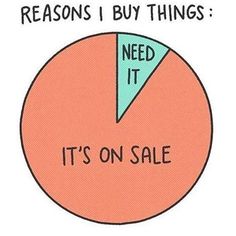
>Everything is on sale eventually. Delayed gratification is therapy in itself.  Most of my favourite retailers have regular sales of up to 30% or more.  Gone are the days when we had to wait for sales only once or twice a year.  I have snatched up so many bargains and dressing well has never been easier, especially for fashions that come and go.  If I see a good classic piece that I know will last the distance and probably not be available at sale time, I may not wait!

>Budget for wants and treating yourself. If you feel you don’t have a handle on self-control when it comes to online shopping, set yourself a monthly budget for purchasing items. This will help alleviate the guilt you feel when you do purchase things because you have given yourself an allowance.  You will also be more selective when spending your allowance.  Setting limits and boundaries is useful for many things!

>Online shopping is great for needs / essentials. I am yet to try out online shopping for groceries, but my friends who do it rave about it.  Once a month they order their pantry essentials in bulk and have them delivered to their door. Delivery is free if you order a certain amount and you can still access special deals. I must give this a go! I do however like to hand pick my own fresh produce, so I don’t think I will be ordering that online, but there are plenty of places that supply fresh produce by the box directly from the farm gate and it is all online.

>Know which sites to trust. Most of our local retailers are now online so getting help or returning things post purchase is relatively easy.  I have had too many mixed experiences with overseas retailers so I do proceed with great caution. Things often seem very cheap but what turns up is also cheap or bears no resemblance to what I thought I had purchased.  I often google the company and look for reviews or messages about scammers. 

>Monitor your online shopping habits.  When are you most likely to do it? I discovered that most of my online purchases happened late at night after 10pm!  I even did it while soaking in a long hot bath! I did it because I was either bored, feeling lonely or down.  Not the most mindful practice of purchasing. 

>Keep your credit/ debit cards separate to your phone or computer.  Being able to grab these at a moment’s notice can be all too easy.  Many sites also allow you to store these details on your user login for future purchases.  I always say no to this option.  It makes it all too easy for next time.

>Credit card or debit card? Which should I use? Credit card companies give buyers more protection than debit cards.  I have been able to intercept and prevent payments to potential scammers with my credit card.  This option is not available if I use a debit card.  Credit cards also have their own perils since you are essentially borrowing money to purchase things for which you have to pay later! The purchase may not feel so great when you get that credit card bill further down the track plus interest if you could not make the payment on time.  Using a debit card is using your own real money here and now.  Remember the first question – do I need this item? Can I afford this item?  

Happy online shopping, especially during COVID.  Online shopping has an entirely new meaning now with COVID! Be careful. Be responsible. Still enjoy shopping. Be kind to yourselves.

BLOG # 12 The Feminine Feminist!

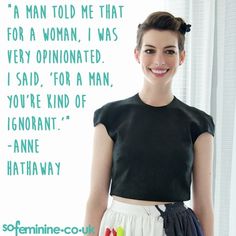
I consider myself a dedicated feminist. I view life constantly through a feminist lens.  I question things, challenge norms and beliefs, always with this perspective in mind.  Despite the many gains we have made as women, there are still many things to question including the subtle opinions and beliefs that often go unnoticed, challenged or even recognized.  These things in particular I feel I have a responsibility to highlight, as they are often the most dangerous in their ability to shape opinions, societal structures, policy, attitudes, bias and beliefs without us even knowing it.  Sometimes my efforts are not always welcomed or appreciated but I continue in a dogged and determined fashion through repetition and on repeat!

This said, I value my femininity too. The two don’t have to be mutually exclusive, with one traded for the other. I can be both – feminine and a feminist.  I appreciate and embrace all of my feminine qualities including my softness, desire for beauty and prettiness, compassion, wanting to nurture and care, collaborate with others, be a home maker, be part of a sisterhood, think with my heart and soul, just to name a few “feminine” qualities.  These qualities are not necessarily exclusive to women, men also have the capacity for such qualities.

My feminine qualities are within me very strongly, in the same way my feminist qualities are as well.  My feminist qualities draw on my skills of being inquisitive, participate in research, be analytical, wanting to shape reform, be a leader, create and see change.  My feminine and feminist qualities sit nicely side by side.  I am very comfortable with who I am.  I still find that some people cannot reconcile the two, as if they cannot be compatible or coexist or that by wanting to be both feminine and a feminist I “want it all” and that is not possible.

There is no compromise for me.  I am both and I don’t see any need to have to choose.  Once I personally accepted this as part of my life’s journey, I started to be much kinder to myself.  I stopped judging myself.  I stopped explaining or justifying myself to others, or reducing who I was because they did not feel comfortable with themselves or were confronted by the idea of questioning the “status quo”.  Discussion, conversation and dialogue about any topic is a very healthy state.  It allows us to see things for what they really are – often constructs made by our very own society – and as such this means they can be modified, dismantled and changed, especially if it means a more equal and fair playing field for all people regardless of gender.   It allows us to consider different perspectives, needs, drivers and points of view – regardless of gender. 

So, I say “here’s to discussion, questioning things if it feels right or necessary”.  Don’t be put off or down by others.  Have confidence and full belief in yourself.  Listen to your heart.  Listen to your gut. Make waves. Don’t be afraid.  We can be feminine and also a feminist!

Be kind to yourself.  Written from my feminine feminist heart for yours.

Iris May

20th July 2020

BLOG # 11 Living life from the heart

Living life from your heart – how does that sound? Cookoo or downright Kooky! Only for the new age wide low pant hipsters who live on air, meditation and skinny almond milk chia lattes?  Still sounds pretty good to me! How often do you live life, make daily decisions, goals, plans and dreams, from your heart? Rather than just your head, brain, a spreadsheet and set of carefully considered set of rationales with pros and cons?

I wish I had listened to my heart more often as I look back on some of the crossroads, I’ve found myself at different times in my life.  The signals of the heart beat loud and true and many a time despite knowing what my heart sang out loud and clear, I went ahead with what seemed rational, expected, was the “responsible” thing to do, would please other people or was some goal to be ticked off along the journey of one’s life.

In our modern world our focus seems to be on strategically planning our lives more from a rational and considered point of view.  I am not saying that to follow one’s heart is not a rational or considered process.  I believe from experience; it should be part of the process and have equal merit if not more merit when it comes to living our lives.  To live from the heart means we are authentic, true to ourselves and the decisions we make will be aligned with our values, beliefs and the core of who we are. 

The costs for me of not having done this are resentment, regret and often finding I forced myself to participate in things that I did not enjoy and even found myself compromised.  Now I am not wanting to paint an entirely bleak picture, but life is short hey! We ourselves can only make decisions and decide on the paths we take.  At times this requires a dedicated listening to what our hearts are saying. What they are saying is for a reason. It is valid, in a similar way that intuition is also valid, that feeling we get in our gut when we know something is not right or is damn right!  Yes, we don’t live in isolation of others. Yes, we do need to live and work together with for example our partners, children, colleagues and friends.  Sometimes compromise is required, but sometimes so is assertiveness and conveying to others the truth coming from our hearts.  Hindsight is a wonderful thing and regrets are mostly useless! Reflection is never wasted as tomorrow, next week and next year are another time ahead to reshape things and live a life from the heart. 

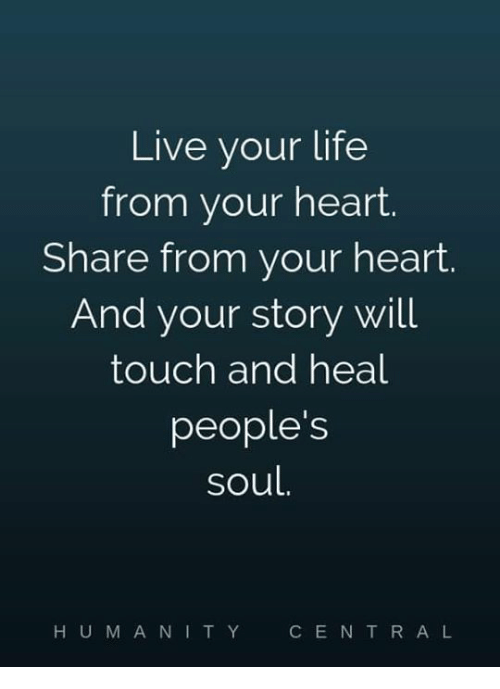
Take a moment fellow people, to stop and listen to your hearts! It is not selfish. It is not being self-absorbed. The feelings I get in my heart are almost tangible when they are overlooked, ignored or brushed aside. A physical pain, a wretched pain, like my soul has been forced to be invisible. Sounds dramatic doesn’t it? Join the Bleeding Hearts Club! Oh, she goes on!  Seriously, take a moment. Listen to your heart. It won’t be a moment wasted. Feel your heart beat. Live more from your heart.  This will bring more kindness to yourself and others. 

Written from my heart for yours.

Iris May

30th June 2020

BLOG # 10 Body – have I told you lately I love you?

Dear Body,

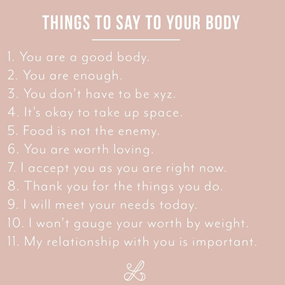
Have I told you lately I love you? Have I told you lately that I care? That I love all the parts of you, whatever shape and size they are.  I love my curves and softness; my hugs are large and true. But most of all I love you, for how incredible you’ve been and are.

How many of you have sung this song to your body lately? Sound crazy? No – not the idea of singing to your body, the idea of loving your body, regardless of what shape, size, length, width it is!

The facts on how most of us feel about our bodies, speak volumes! 90% of people are unhappy with their body (Get the facts).  Yes, speaking of bodies – volume is not a bad thing!  Sadly, only 4% of women in the world think they are beautiful! (Thrive global). The truth is that despite all the images we see and that are projected our way especially from the media about what a “typical” body looks like – the proof is definitely not in the media pudding – there are so many different types of bodies, shapes, frame sizes and the like out there.  Only 5 to 10% of people actually have a body like those projected in the media, and most of these images have been edited and photoshopped anyway! Don’t fall for the media hype that we should all be a size 6 to 8, be super toned and fit and never let a morsel of fat or carbohydrate pass through our lips.  

At the tender age of 51 (!) I am totally in love with my body – voluptuous, healthy, strong, robust and capable.  It can do so many things.  I live in wonder every day at the miracle of life and all the things my body has done, continues to do and will do – hopefully for many decades to come.  It is important to embrace who we are.  I have never been a thin wafer and if I have ever considered myself to be thin (size 10 to 12 & 14 to 16) I have had to starve myself and exercise like a champion race horse.  Needless to say, it didn’t last long and I have always gravitated back to a healthier more balanced version of myself which is somewhere between sizes 16 to 18 and even 18 to 20.  Most people say they cannot believe I am these sizes, but once again I am tall, have a solid frame and tend to be on the slightly heavier side and I feel completely normal.  I feel no shame about my body.  I dress to suit my body and to make myself feel confident and good about myself – only for me.   

Having a “positive” relationship with our body is an important part of being kind to ourselves.  Comparing ourselves to others in any way is never helpful.  We are all unique but the same! There are differences but also common threads. To accept ourselves as we are is one of the greatest acts of kindness we can have for ourselves.  This includes what we have been given genetically for our bodies.  Genetics are a lottery.  It is not like we got to choose our genetics. Why waste time pushing against the grain and what we are not naturally and work with what we have and do this positively? Sounds easier to me!

Some signs you may not have a positive relationship with your body:

  • You are always on a diet.
  • You feel guilty if you don’t exercise.
  • You binge eat then restrict food intake.
  • You compare your body constantly to others.
  • Your mood and confidence are determined by how you feel about your body.
  • You buy smaller clothes than you fit into now.
  • Refuse to be naked in front of anyone.
  • Make negative comments to others about our body.
  • Always think “one day when I am thinner or smaller”.

What type of bodies do partners like?

Well, the answer to that is I don’t really care! The research indicates that there is a wide (!) spectrum in terms of what partners like and find attractive in another person (Shape.com). A proportionate and healthy body seems to be more important than size. At the end of the day personality and confidence also count.

Let’s all have a go at changing the conversation around bodies.  It starts with us.  It starts with you.  Here are some ways to step up the conversation and shift attitudes:

  • Give compliments to others, not just about how they look, but also their attitude, personality, confidence and achievements.
  • Let your personality shine! This is what other people notice and see more than your body.
  • Stop comparing yourself to others. You are not others.
  • Post honest photos on social media of yourself.
  • Project confidence from the inside out.
  • Treat all people the same regardless of their body. Everyone is valuable and equal.
  • Don’t complain about your body. Focus on the positives and be grateful for having a body!
  • Find clothing styles that you feel comfortable in and enable you to feel confident with your body.
  • Avoid people who are critical of you in relation to your body or other people’s bodies. Tell them this is not acceptable for you.  
  • Focus on having a healthy mind and body, rather than a particular size or shape of body.

Written by my gorgeous healthy and fabulous body and mind for you. Be kind to yourselves.

Iris May 23rd June 2020

BLOG # 9 Mindless Multitasking

Multitasking is a skill many say comes naturally to women.  This might be true, but I feel that today we have taken multitasking to the next level! Our hectic modern lives with the multiple concurrent streams of responsibilities, be it work, family, study, home duties, finances, sporting activities, physical exercise, community, being creative  – ahhhh the list goes on!  We are now really mindlessly multitasking in many situations.  We wish we had a magic emergency “stop” button to stop the treadmill of life or we feel we are going to implode, explode or self-combust! BANG! Sometimes I have literally gone BANG! Those around me have been casualties for sure (sorry!).

Don’t get me wrong – I love the way I can multitask and organise multiple things at once.  I see this as a particular strength.  I have come to realise however that I am rarely ever “present” to use that swanky term we all seem to also use these days.  Swanky this term may seem; however, it has a lot to say!  Being present means you get to focus, think, tune in to how you are feeling about a task or situation, be thorough, problem solve efficiently, identify emotions and at a simple level not be rushed and get to do something well, properly and joyfully.   After a normal day of mindless multitasking I often feel like I have been on an endless washing machine spin cycle! I come out wrung out, a bit stretched and washed out!  Sound familiar?????

Signs you are mindlessly multitasking:

  • Rushing everywhere
  • Not completing tasks
  • Constantly stopping and starting the same task
  • Forgetting what you were doing or how you even got somewhere
  • Not listening completely
  • Chronic exhaustion
  • Feeling you never get to complete anything or do anything properly
  • Always thinking you should be doing something or there is always something that has to be done
  • Feeling empty and insincere.  Life is just a series of transactions and tasks to be completed

Effects of multitasking on your body:

  • Reduced brain function and IQ! (University of London).
  • Possible damage to our brains that can be permanent (University of Sussex).
  • Reduced cognitive ability, empathy and emotional control (Neuroscientist Daniel Levitin).
  • Increased anxiety and depression (University of Michigan)
  • Increase in production of the stress hormone cortisol leading to adrenal fatigue (Your Hormones)

The above are good reasons to try to reduce your levels of multitasking:

I have been testing out focusing on one thing at a time. Not answering the phone and at the same time typing on my computer, reading and replying to emails, waving at someone over the counter to put something somewhere – all at the same time!  This is my normal…….. I have been listening more attentively to people, being more personal, allowing myself to complete one task at a time.  I often write notes or messages to myself so I don’t forget things and come back to them later.  I have been having some amazing conversations with my 15yo son.  Sitting and listening to him rather than brushing him off and not really stopping to hear what he is saying.  I am the driver in the seat, setting the pace, being more realistic with myself, giving myself permission to slow down – yes I am going to say it – “smell the roses”.  I am rebelling. Against the mindless multitasking.  I am not a machine or a widget in a factory be it at work, home or out and about.  I want to do things thoroughly, well and calmly.  Yes, there are times we have to step up and work under pressure to get certain things done. Think on our feet quickly and efficiently.

You are the driver:

Remember – you are the driver of the bus in your life and determine if all the seats are full! You have an accelerator, break and stop button.  You don’t have to pay a “toll” and accept what you think is the hand you have been dealt.  Don’t buy into the modern mantra that “this is how it is” or “I don’t have any other choice”.  Saying NO is necessary at times, mostly to ourselves. Saying NO is liberating, powerful and often essential. Be the driver of your bus not just the instructor.  Here’s to a slower and more joyful you.   Be kinder to yourselves.

Written from my calmer heart, mind and body for yours.

Iris May

12th June 2020

BLOG #8 Creativity is not a bone in your body!

Some people say they don’t have a creative bone in their body! Everyone is creative, it is just a matter of finding out what this means for you. Being creative can mean all sorts of things and is really about being spontaneous, imaginative, allowing our minds to wander and daydream.  Creativity may result in the creation of a physical object, or something intangible such as an idea or solution.  Being creative is an important part of being kind to ourselves.  Allowing ourselves time for creativity is not something adults are necessarily encouraged to do.  We see an immediate decline in active creativity when we become adults, as opposed to when we are children and teenagers. You can practice creativity in so many different ways such as travelling to new places or engaging in a new hobby.  You just need to be open to new possibilities, be curious and embrace the idea that there are no such things as mistakes!

What does creativity mean to me?

Creativity means something relaxing and enjoyable, an activity that I find pleasurable and where I have the opportunity to explore something, express myself and in my case is usually something that is tactile and produces something of colour, texture and beauty.  It doesn’t have to have a functional purpose; in fact, it is most often just for decorative reasons and to be appreciated for its uniqueness and style.  I developed a fetish for buttons at some stage.  I love making necklaces and other pieces out of them.  The end product is always exciting and sometimes the first attempt isn’t the final attempt! It is also the process of making the piece that I love.  It is often repetitive, unplanned and can go anywhere.  There are no rules, deadlines or pressures.  The process and outcome are for myself only.  Often the process can be intense rather than relaxing, but this is because I am excited about the creative process and what transpires. It is a rewarding kind of intensity.  I also enjoy sewing, painting, renovating old furniture pieces and gardening.  I grew up in the country where activities and social outings were scarce, so I learnt to sew, cook and garden at an early age – mostly because there wasn’t much else to do!  I am grateful for having learnt these skills and now being able to apply them creatively.  You don’t have to be good at something to give it a go!  Learning new things for fun is also creative.

There are even health benefits from being creative!

Research (The Learning Blog) has also proven that there are many health benefits from being creative, so being healthier surely is another way to be kind to yourself.  Benefits include increased mood, less anxiety, boost in brain function, disease prevention and increased immunity.  All more good reasons for being creative.

So how can you become (more) creative?

  • Firstly, pay more attention to being creative and allocate time for it. Try and allocate time at least once a month. Like all things, practice does make near perfect!
  • Think of some ways you can have fun and be playful without any purpose, specific outcome or exact method.
  • Do you have an old hobby that you previously enjoyed e.g. playing guitar or piano that you have left behind in times gone by?
  • Join a group that involves a hobby that you are interested in.  This helps increase participation and commitment to being involved in the hobby. You can share tips and tricks.
  • Search the internet to get more information about a creative pursuit.  There is a huge amount of information available to help you get started including you tube videos.
  • Visit some art galleries, museums or go to the theatre or a concert. Explore what types of art appeal to you.
  • Writing is a way to be creative.  It can be free writing, a short story, a journal or poetry. You are writing for you.
  • Reading is a great way to expand thinking and ideas.  There are many different types of books available online as well as at your local library or street book exchange.
  • Music is another form of creativity, whether you play an instrument or just listen to it.  There are many different kinds of music to be enjoyed.
  • Exercise can also be a form of creativity. Dancing or free form, walking in nature or running.   Anything goes…
  • Photograph something. Anything. Practice in different lights, at different times of the day. It can be things in nature, scenery, places, people, objects – anything!.  You don’t need expensive equipment to give it a go.
  • Decorate a room in your home.  This may involve painting something, restoring an old piece of furniture, exploring old photographs and pictures, rearranging the furniture or sewing something.
  • Enrol in a short course. To learn about something new. Your local neighbourhood house has lots of short courses. There are also many on-line.

Just give it a go!

Perfection is not the name of this creativity game! Quite the opposite.  It is the journey during creativity, not the destination that is important.  The possibilities are limitless!

Written from my creative heart for yours

Iris May

9th June 2020